
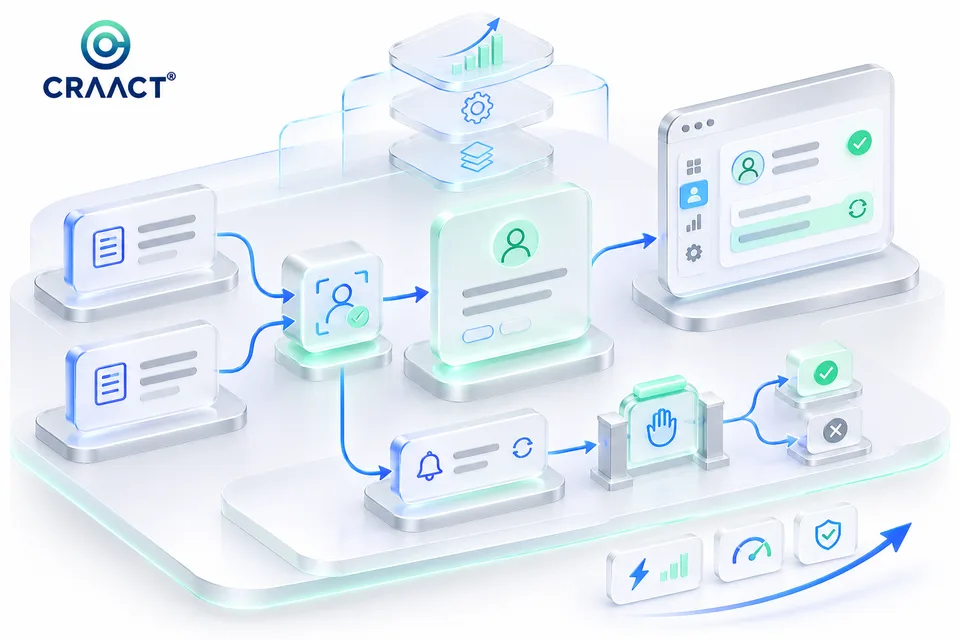
When the same visitor submits a website form twice, two questions need answering. Does the CRM recognise the same contact? And should the surrounding workflow create another task, notification or opportunity? Treating those as one question is a common design mistake.
A well-defined integration can update an existing record while still handling each legitimate inquiry as an event. The right behaviour depends on the sales process, the available identifiers and the consequences of repeating an action. Decide those rules before making a form-to-CRM connection look finished.
A contact and an inquiry are different things
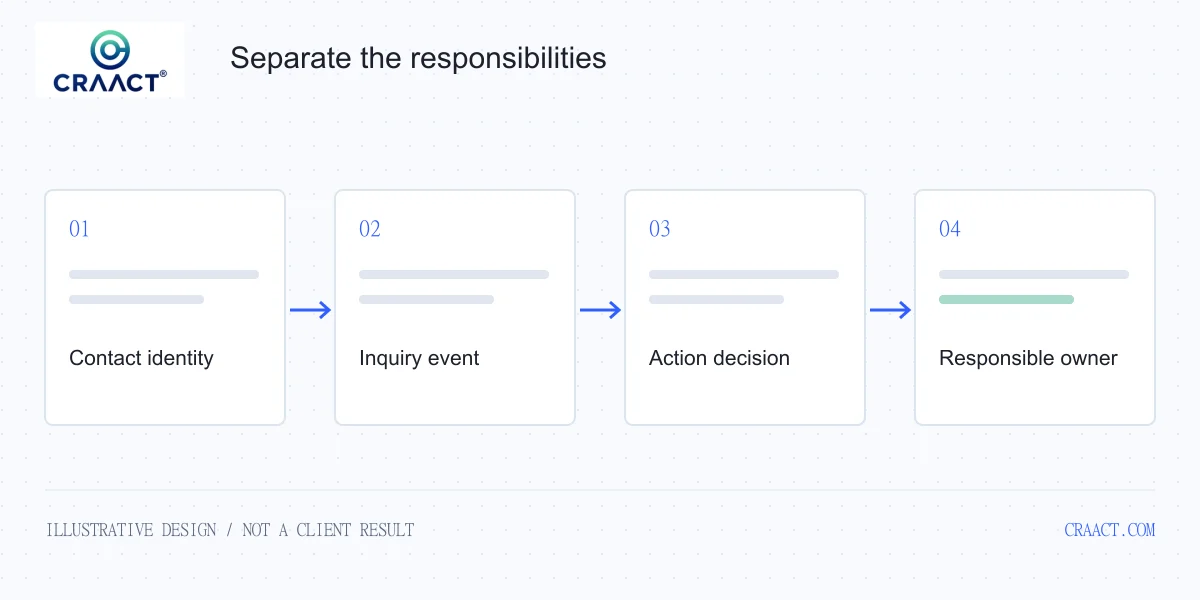
A contact represents a person or business relationship. An inquiry represents something that happened: a request for a proposal, a support question or an interest in another service. One person may make several legitimate inquiries. Conversely, one inquiry may be delivered several times because the browser retries or an integration does not receive a clear acknowledgement.
Matching every request to one contact is useful, but it does not tell the system whether a new opportunity is appropriate. The discovery question is therefore broader than “can we deduplicate emails?” Ask what should remain distinct, what should update an existing record and what evidence is needed to decide.
Use the platform mechanism with its actual limits
HubSpot's Contacts API documentation describes batch upsert using email or a custom unique identifier. It also notes that partial contact upserts using email as the idProperty are not supported, and points to a custom unique identifier for that use case. Check the current endpoint, object and property configuration rather than copying an integration pattern from another platform.
That API choice is only one part of the design. Agree which fields the website may change, how existing sales-owned information should be preserved and how a conflict is reviewed. A technically valid update can still be the wrong business action if it replaces context the team needs.
Define a repeat-delivery rule
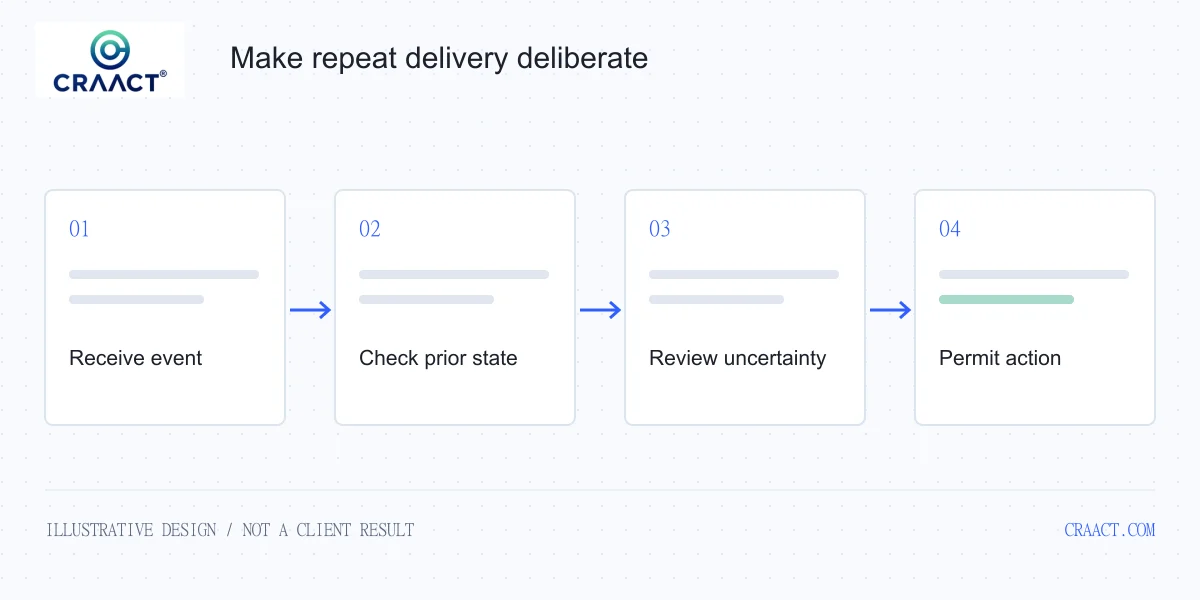
A source event identifier can help the receiving workflow recognise a repeated delivery of the same event. It should remain stable across retries of that event, while a genuinely new request receives its own identity. An email address on its own cannot make this distinction because the same person can request more than one thing.
Decide how long the integration keeps that delivery history, which component owns it and what happens when a partial failure occurs. For example, creating a CRM record may succeed while the task-creation response is lost. Retrying the entire flow without checking the recorded state can produce an extra task even though the contact remains unique.
Keep important updates deliberate
Divide the fields by responsibility. The website may be authoritative for the submitted message and source page; the CRM may be authoritative for account ownership or a reviewed sales stage. Do not assume a newer timestamp makes every source value more trustworthy.
For uncertain matches, create a review path instead of overwriting aggressively. Shared inboxes, acquisitions, changed addresses and data-entry mistakes can all require human context. The reviewer should see why the integration proposed the match and what change would follow, with only the information needed for that decision.
Test the exception path before adding more automation
A useful acceptance pack includes at least these scenarios:
- A new person makes a first inquiry.
- An existing contact requests another service.
- The same submission is delivered twice.
- A downstream action succeeds but the caller receives an uncertain response.
- An update has missing or conflicting fields.
- The proposed owner is unavailable or invalid.
- A CRM or external API is unavailable and the request needs review.
For each case, specify the expected contact, inquiry, owner and downstream action. Check both the visible result and the recovery path. Logs should help diagnose the workflow without unnecessarily copying full inquiry messages or other personal data into every monitoring system.
Measure the next business action
Counting contacts created can make a workflow look busy without showing whether it is useful. Depending on the agreed scope, better operational questions include whether an inquiry reached an owner, whether exceptions were resolved and whether the team understood the context needed for follow-up.
Separate aggregate process reporting from access to the underlying messages. A marketing or SEO report generally does not need private inquiry text, and analytics consent or browser tracking does not replace the permissions needed to process customer records. Define the reporting fields and audience deliberately.
A useful first release
Start with one website form, one CRM entry path and one clearly owned next action. Demonstrate repeat delivery, recovery and review before connecting more channels. This keeps the operating contract understandable and gives the team a reference for future changes.
Craact's CRM integration service connects website capture with Zoho, HubSpot or a custom platform. The RELAY design study illustrates the architecture; it is not a claim of measured client results. If you are planning a connection, bring the current form, destination workflow and the exception that causes your team the most difficulty.
Source checked on 19 November 2026: HubSpot Contacts API guide. The surrounding acceptance framework is Craact's implementation analysis. Verify product details against the API version and subscription in use.